
 Shepherd
On Site Daily Flat
Flat
Per-Acre Quote Zero
Zero
Herbicide Solar
Solar
Electric Fence Daily Goat-Cam
Texts
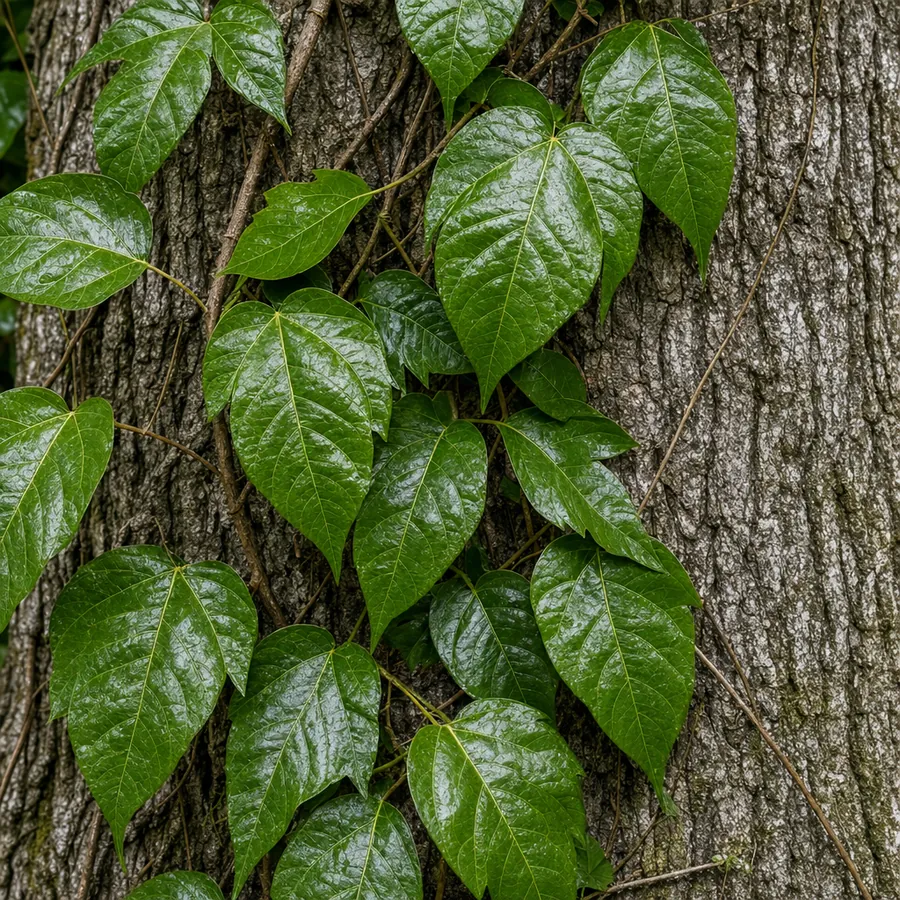
Poison ivy is a people problem.
 The oil stays on gloves, tools and dogs
 Spraying near creeks, kids and gardens
 Vines climb thirty feet up your trees
We send staff who are immune to all three.
Meet your poison ivy specialist

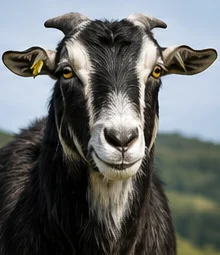
Gary
Senior Poison Ivy Specialist
“Gary eats poison ivy for breakfast. And lunch. We have stopped asking about dinner.”
20 to 40goats per job
About 1/4acre per day
0 gallonsof herbicide
The Goat Squad Method
- 1
 Free
Free
walk-throughWe walk the land with you - 2Flat
per-acre quoteIn writing, before the gate opens - 3
 Fence up,
goats inShepherd on site every day - 4Daily
goat-cam textsWatch the vines disappear
What poison ivy removal includes
- Walk-through and flat per-acre quote
- Solar electric fence around the work area
- Shepherd on site every day
- Daily goat-cam photos by text
- Fence-out of gardens and trees you want kept
- Optional follow-up graze for regrowth
Day 1 vs Day 5
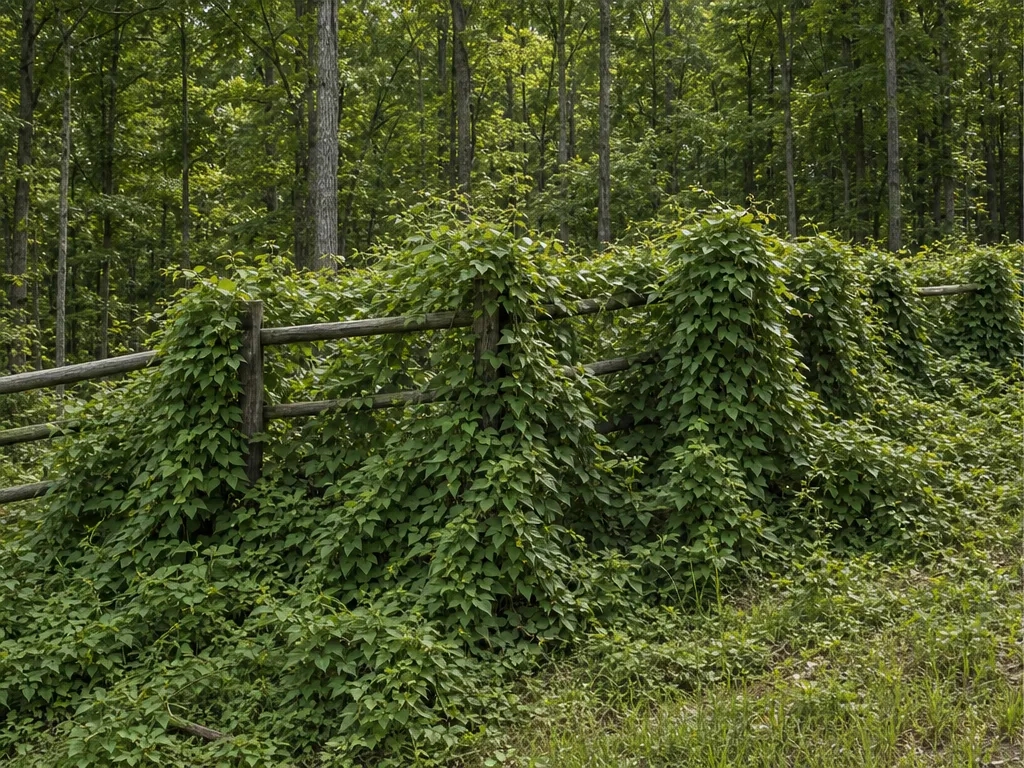 Day 1
Day 1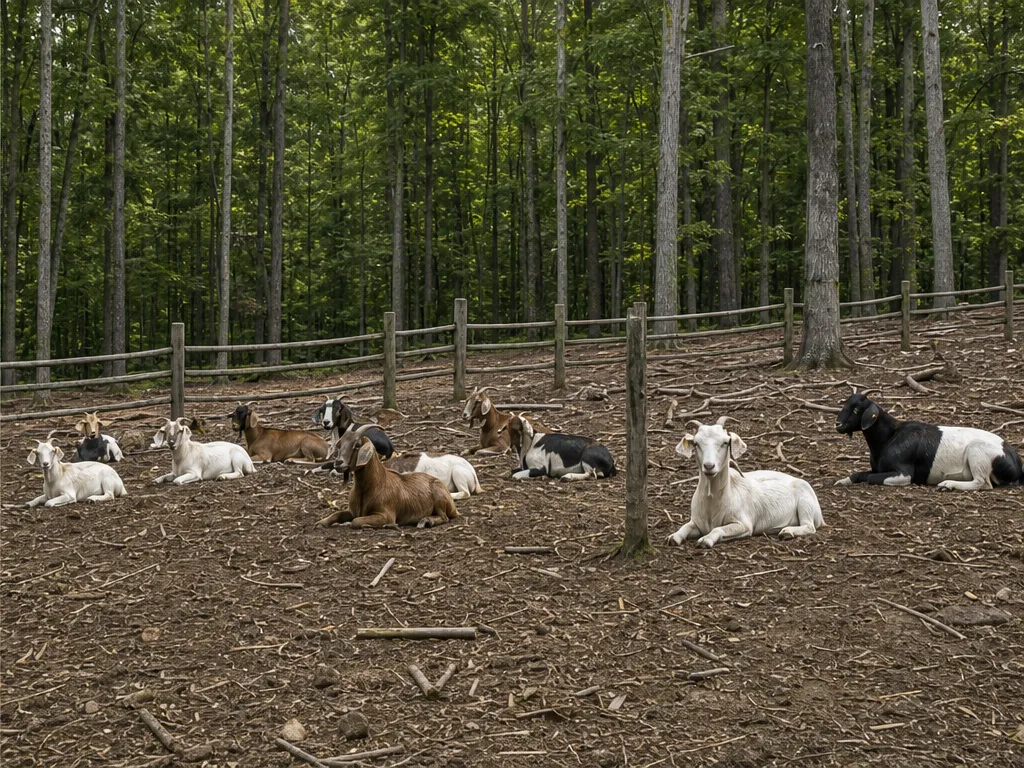 Day 5
Day 5How goats remove poison ivy
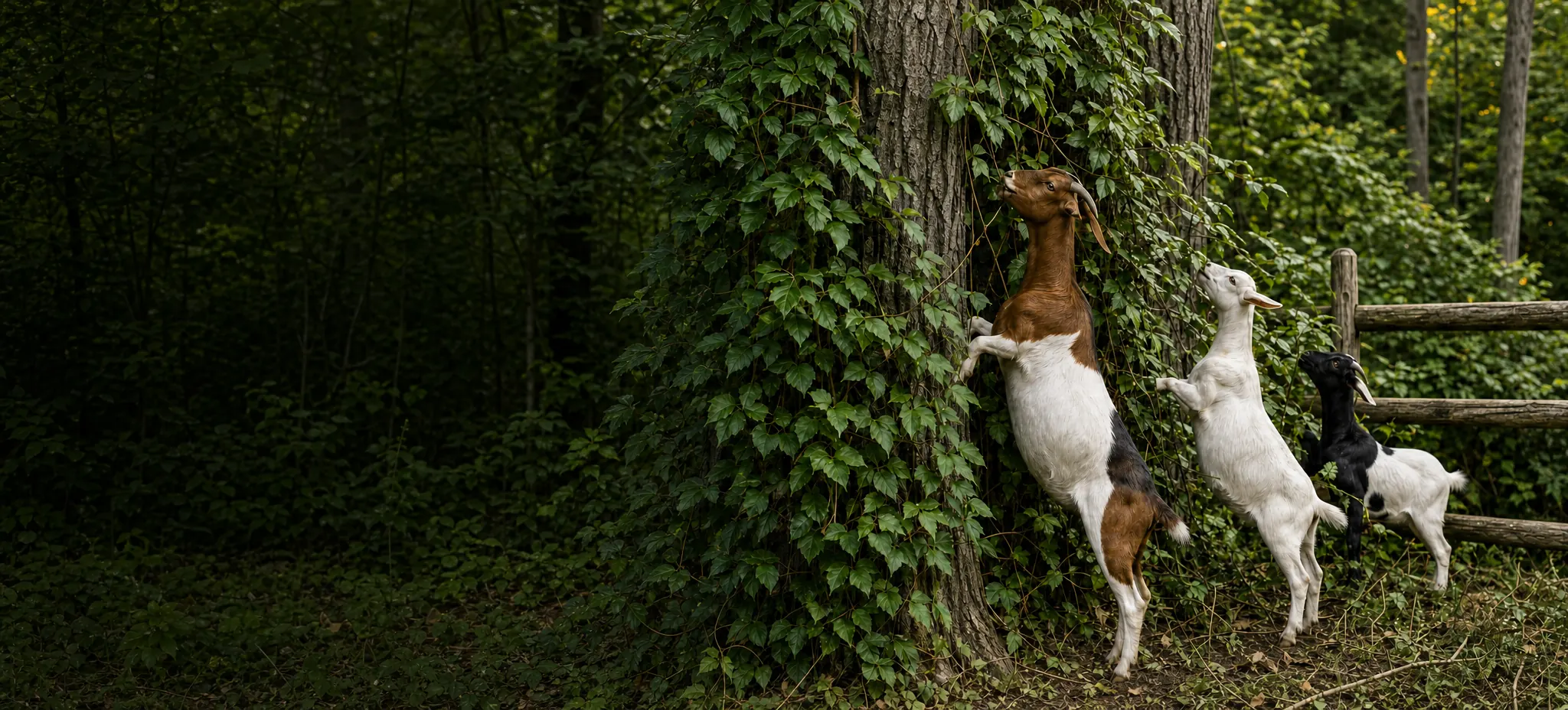
Poison ivy gets its rash from urushiol, an oil in the leaves, stems and roots. People react to it. Goats don't. To a goat, poison ivy is just a leafy green that happens to grow at snout height, and they eat it with real enthusiasm.
On a job, the herd works inside a portable solar electric fence. They strip the leaves first, then the tender vines, then keep browsing anything that tries to leaf back out while they're on site. A herd of about 30 goats typically clears around a quarter acre a day, faster in light growth and slower in thick, woody tangles.
Because goats can stand on their hind legs, they reach vines climbing trees and fences up to about six feet. Above that, we'll tell you honestly during the walk-through what the goats can reach and what they can't.
Goats vs. herbicide vs. pulling it by hand
| Compared on | Goats | Herbicide | Pulling by hand |
|---|---|---|---|
| Rash risk for people | Very low. Nobody touches it. | Low to moderate | High, even with gloves |
| Steep slopes | Built for it | Hard to apply evenly | Slow and risky |
| Near creeks, gardens, pets | No chemicals at all | Drift and runoff concerns | No chemicals |
| What's left behind | Bare stems and fertilizer | Dead brown vines that still carry the oil | Bags of oily waste to dispose of |
| Roots | Weakened over repeat grazes | Can kill roots, often needs reapplication | Removed if you get all of it |
The honest summary: goats are the best first move on big, steep or awkward patches. For a single vine by the mailbox, a careful person with good gloves is probably faster.
Why one visit isn't the end of it
Poison ivy spreads through a network of roots and runners. When the goats strip the plant, the roots are still alive and will push out new leaves. That regrowth comes back weaker every time it has to regrow from stored energy, which is why the most effective plan is a first graze followed by one or two short follow-up grazes over the next season or two.
We'll suggest a follow-up schedule at the walk-through and quote it separately, so you can decide after you've seen the first round.
Safety notes from the shepherd
- Don't pet the staff for a few days. The oil can ride on a goat's coat after a poison ivy shift. Admire them from the other side of the fence.
- Never burn cleared poison ivy. The smoke carries urushiol and can cause serious lung irritation.
- Keep dogs out of the grazed area until it has had a rain or two, since oily stems can transfer to fur.
- The fence is electric. It's a mild, safe pulse, but it's not a friendly one. The goats learn fast. Toddlers and dogs should too.
Where poison ivy grows around Asheville
In the mountains, poison ivy loves edges: fence lines, forest borders, the steep strip between a backyard and the woods, and creek banks feeding the French Broad and Swannanoa rivers. We see a lot of it in wooded lots in West Asheville, along old fence rows in Weaverville and Leicester, and on the steep yards around Black Mountain and Fairview.
If you're not sure whether it's poison ivy, Virginia creeper or something else entirely, that's part of the free walk-through. The shepherd will identify it, and the goats will eat it either way.
Poison ivy questions
Can goats get sick from eating poison ivy?
No. Goats don't react to urushiol the way people do, and poison ivy is one of their favorite foods. The shepherd still checks the herd every day and keeps fresh water and hay on site.
Will the goats kill the roots?
Not in one visit. Goats strip leaves and vines, which forces the roots to spend stored energy regrowing. Repeat grazes weaken the patch over a season or two. We quote follow-up grazes separately.
How long does a poison ivy job take?
A herd of about 30 goats clears roughly a quarter acre a day, depending on how thick the growth is. Most residential jobs take a few days. You'll get the timeline with your flat per-acre quote.
What about poison ivy climbing my trees?
Goats stand on their hind legs and reach vines up to about six feet. Above that, the vines usually die back once the lower growth is gone, and we'll point out anything that needs a person with a ladder.