
 Shepherd
On Site Daily Flat
Flat
Per-Acre Quote Zero
Zero
Herbicide Solar
Solar
Electric Fence Daily Goat-Cam
Texts
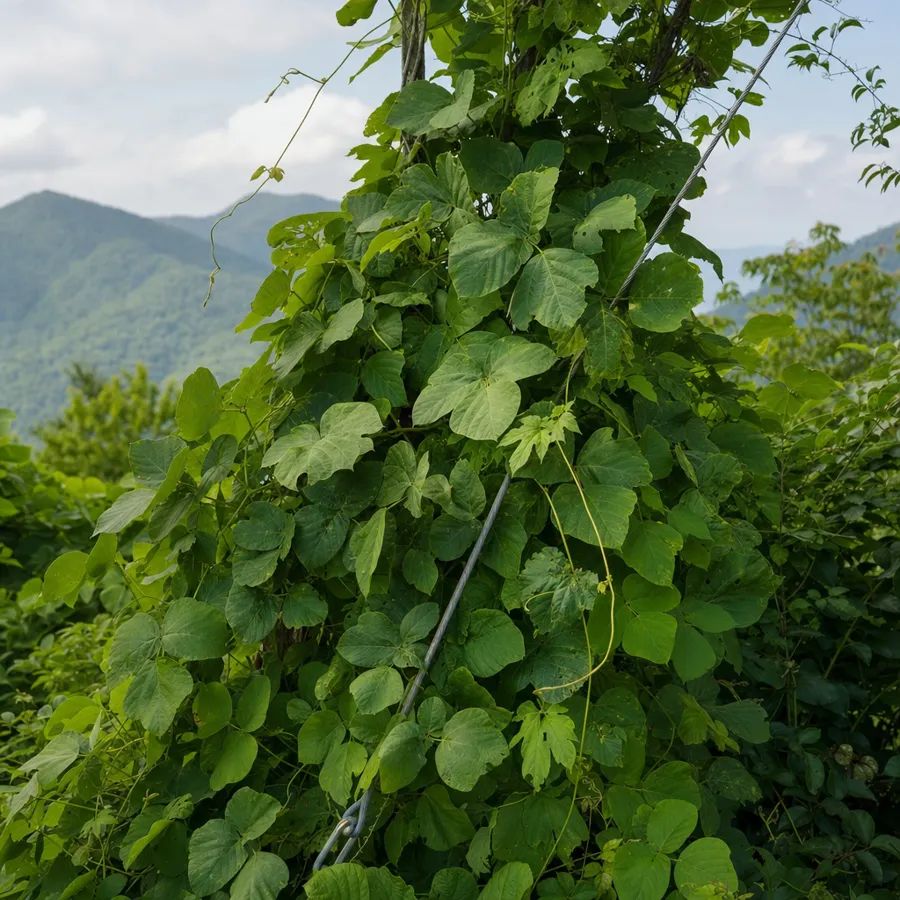
Kudzu doesn't stop for anyone.
 Up to a foot a day in peak summer
 It shades out trees and drags them down
 Cut it in June and it's back by August
We send staff who eat faster than it grows.
Meet your kudzu specialist


Dolly
Head of Kudzu Operations
“Dolly has eaten kudzu every summer she's been employed. She considers the vine a personal matter.”

20 to 40goats per job

About 1/4acre per day

0 gallonsof herbicide
The Goat Squad Method
- 1
 Free
Free
walk-throughWe walk the land with you - 2Flat
per-acre quoteIn writing, before the gate opens - 3
 Fence up,
goats inShepherd on site every day - 4Daily
goat-cam textsWatch the kudzu disappear
What kudzu control includes
- Walk-through and flat per-acre quote
- Solar electric fence around the work area
- Shepherd on site every day
- Daily goat-cam photos by text
- Fence-out of trees and plantings you want kept
- Multi-season regraze plan for the root crowns
Day 1 vs Day 5
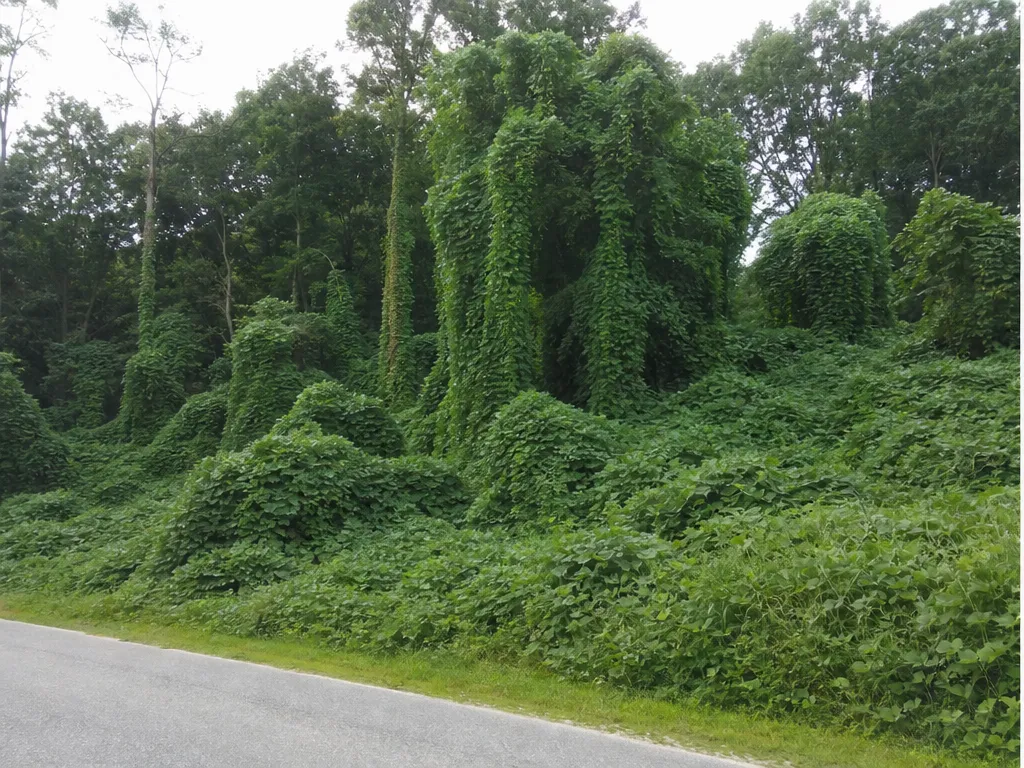 Day 1
Day 1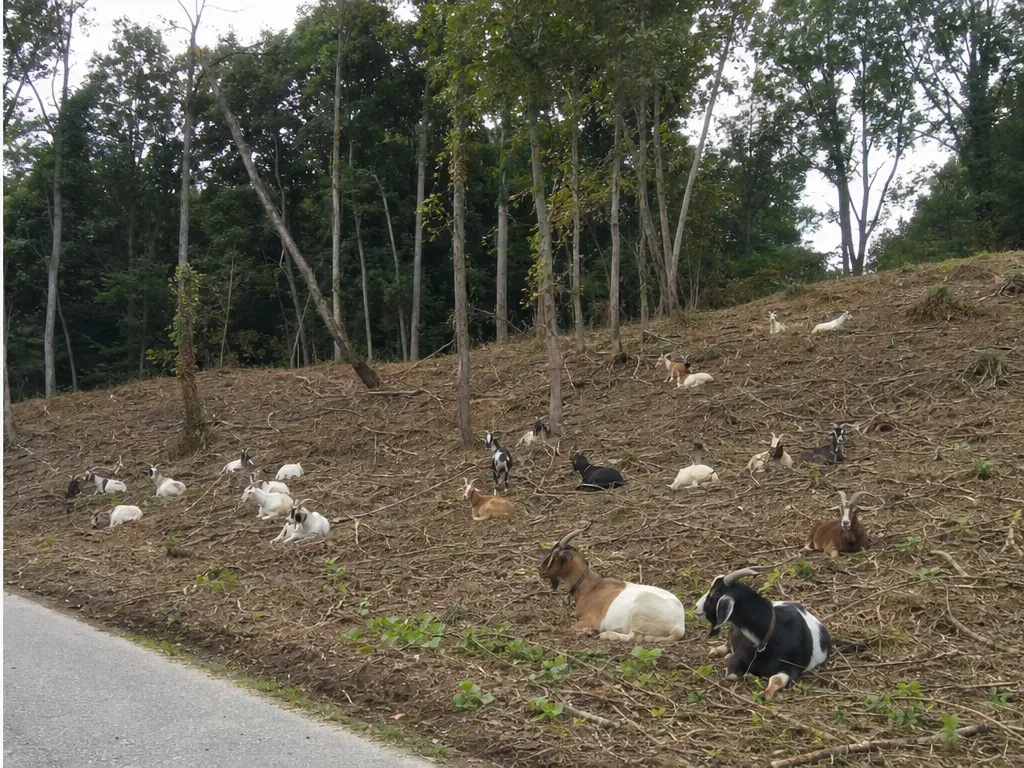 Day 5
Day 5How goats control kudzu
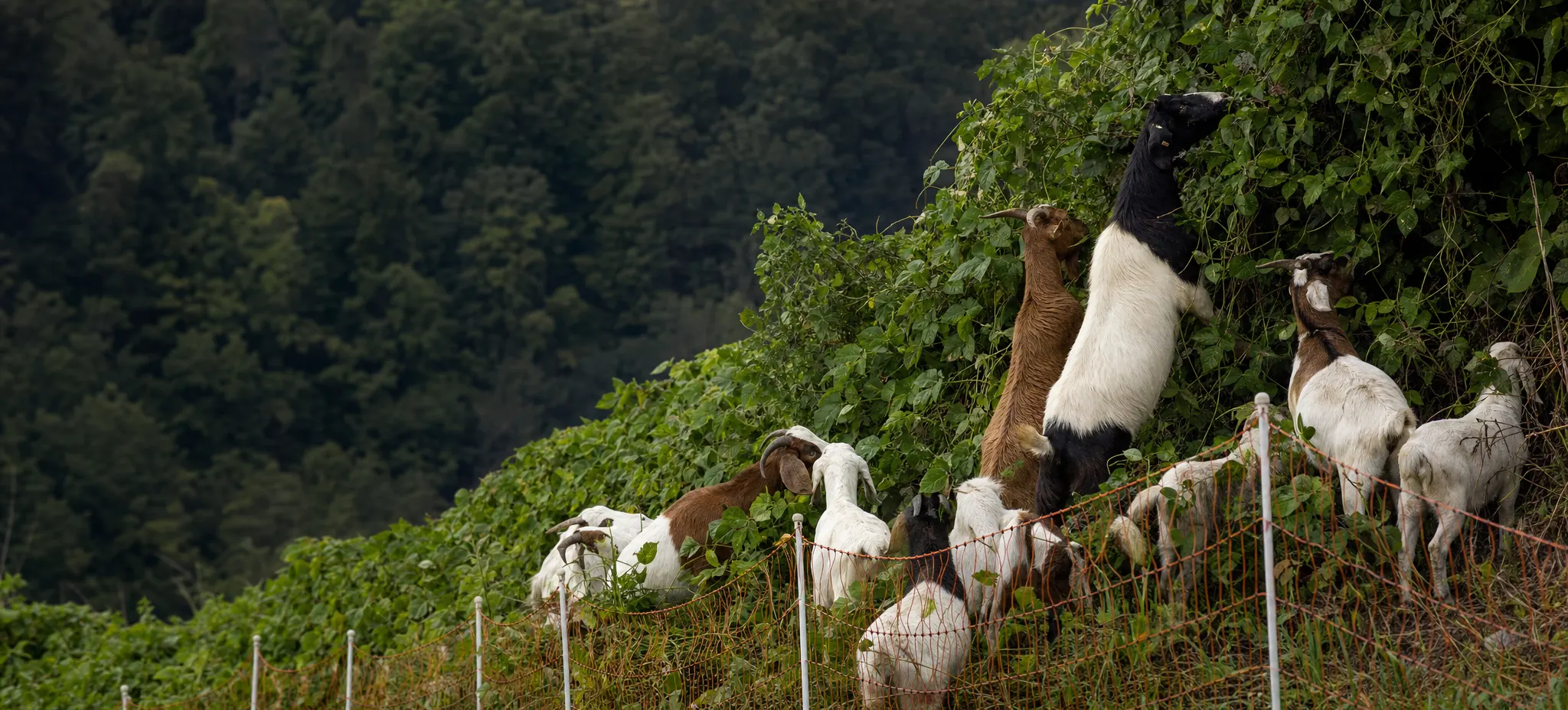
Kudzu is a legume, which means its leaves are high in protein, and goats treat a kudzu patch like a salad bar that climbs. The herd strips the leaves first, then the tender runners, and keeps browsing any new shoots for as long as they're on site. Standing on their hind legs, they reach vines up to about six feet off the ground.
The work happens inside a portable solar electric fence that we set around the patch. A herd of about 30 goats typically clears around a quarter acre a day. Dense, old kudzu that has piled up several layers deep over a tree line goes slower. A thin stand along a fence goes faster.
Kudzu higher up in the trees still has its own leaves, so it won't always die just because the bottom is gone. Once the goats have cleared the base, the vines are easy to see and easy to reach, and cutting them at knee height with loppers cuts the upper growth off from its roots. That part dries out and dies back over the following weeks, and the trees underneath start getting sunlight again.
Goats vs. herbicide vs. cutting it back
| Compared on | Goats | Herbicide | Cutting or mowing |
|---|---|---|---|
| Steep banks and ravines | Built for it | Hard to apply evenly | Slow, risky, often impossible |
| Near creeks, gardens, pets | No chemicals at all | Drift and runoff concerns | No chemicals |
| Vines up in the trees | Cleared to about six feet, easy to cut above that | Hard to reach without spraying the tree | Needs climbing or a lift |
| Root crowns | Weakened over repeat grazes | Can kill them, usually over several seasons | Barely affected by a single cut |
| What's left behind | Bare stems and fertilizer | Standing dead vines | Piles of vines to haul |
The honest summary: goats are the best first move on big, steep or tree-covered patches, and they pair well with other methods. No single approach, ours included, finishes an established kudzu patch in one season.
Why kudzu takes more than one season
Kudzu stores its energy underground in large, starchy roots. On an old patch those roots can get very large, and every vine grows from a root crown at or just below the soil surface. As long as a crown is alive and fed, it will keep sending out new runners.
Grazing works by making the plant spend those reserves. Every time the goats strip the leaves, the crown has to push out new growth without getting much back from photosynthesis. Do that several times a growing season, for more than one season, and the patch gets thinner and weaker. Crowns that survive can be dug out by hand once the ground is visible, which is much easier after the goats than before.
What that usually looks like in practice:
- First graze in late spring or early summer, once the patch has leafed out.
- One or two regrazes the same summer as new shoots come back.
- Repeat the following years until regrowth is thin enough to handle by hand.
How many seasons it takes depends on how old and thick the patch is. We'll give you our honest read at the walk-through, and you can see how our quotes work in the goat grazing cost guide.
Getting the most out of a kudzu graze
- Don't mow it first. The goats want leaves, and a mowed patch just regrows into a tougher version of itself. Let the staff have it at full height.
- Book before midsummer if you can. Kudzu can grow up to a foot a day in peak summer, and the earlier the first graze, the more regrazes fit before frost.
- Tell us what's worth saving. Goats aren't picky. We fence out the dogwood, the vegetable bed and anything else you want kept.
- Plan for what comes next. Bare ground invites the next invader. Once the kudzu is weak, planting natives or a groundcover helps keep it from coming back.
Kudzu dies back to bare vines at the first hard frost, so fall bookings are usually about scouting the patch and setting up next year's plan. The staff takes the winter off. They've earned it.
Where kudzu grows around Asheville
Kudzu was planted across the Southeast for erosion control in the 1930s and 1940s, and in the mountains it still hangs around the places that were disturbed: road cuts, old railroad grades, riverbanks and the edges of cleared lots. It tends to be heaviest at lower elevations and thins out as you climb into cooler, higher ground.
Around Asheville we see it along the French Broad River corridor, the Swannanoa River through Black Mountain and East Asheville, on steep banks in West Asheville, and on the edges of older properties in Candler, Leicester and Weaverville. If a tree line near you looks like a green blanket was thrown over it in July, that's usually kudzu.
Not sure what you're looking at? Book a free walk-through. The shepherd will identify it, measure it and quote it by the acre before the gate opens.
Kudzu questions
Do goats actually eat kudzu?
Yes, and happily. Kudzu leaves are high in protein, and goats will strip a patch down to bare vine. The shepherd keeps fresh water and hay on site so the herd has a balanced diet.
Will goats get rid of kudzu for good?
Not in one visit. Goats strip the leaves and vines, which forces the root crowns to burn stored energy regrowing. Repeat grazes over more than one season wear the patch down, and any stubborn crowns can then be dug out.
How long does a kudzu job take?
A herd of about 30 goats clears roughly a quarter acre a day, depending on how dense and layered the kudzu is. Most residential patches take a few days per graze. You'll get the timeline with your flat per-acre quote.
What about the kudzu hanging in my trees?
The goats clear everything they can reach, up to about six feet. Above that, the vines still have leaves, so once the base is grazed clear we recommend cutting each vine at knee height. The growth up in the canopy then dries out and dies back over the following weeks.