
 Shepherd
On Site Daily Flat
Flat
Per-Acre Quote Zero
Zero
Herbicide Solar
Solar
Electric Fence Daily Goat-Cam
Texts
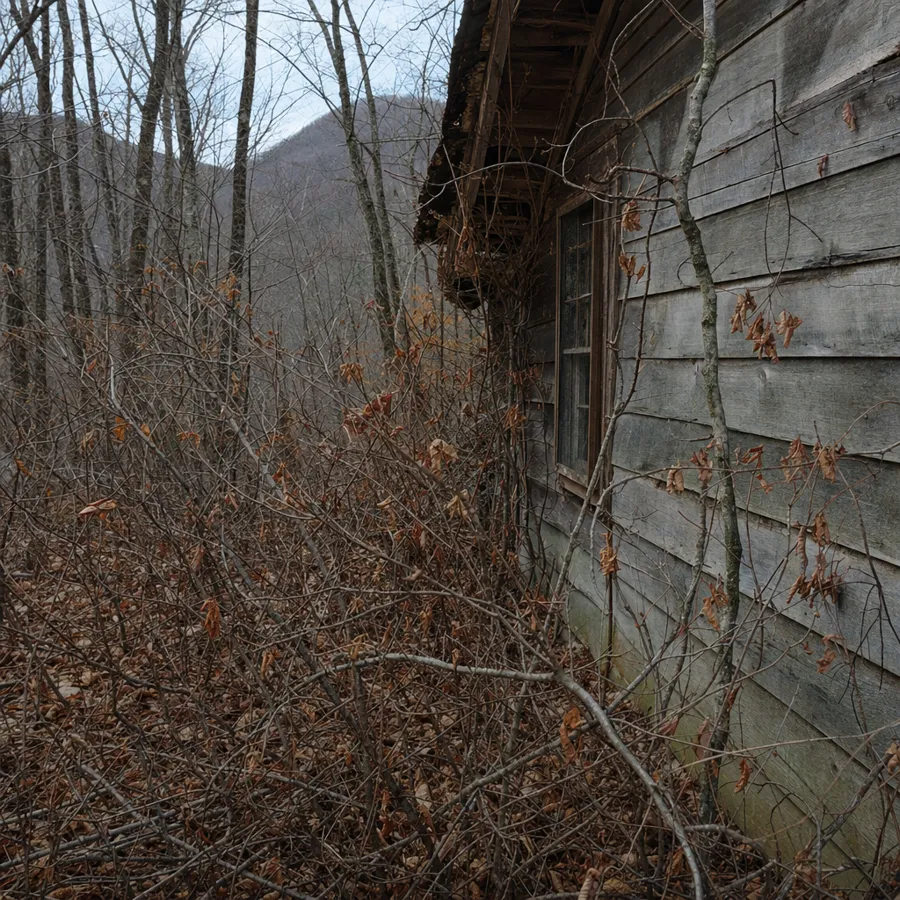
Brush is kindling with a mailing address.
 Vines and brush carry fire up into trees
 Understory creeping right up to the deck
 Slopes too steep for a mower or a crew
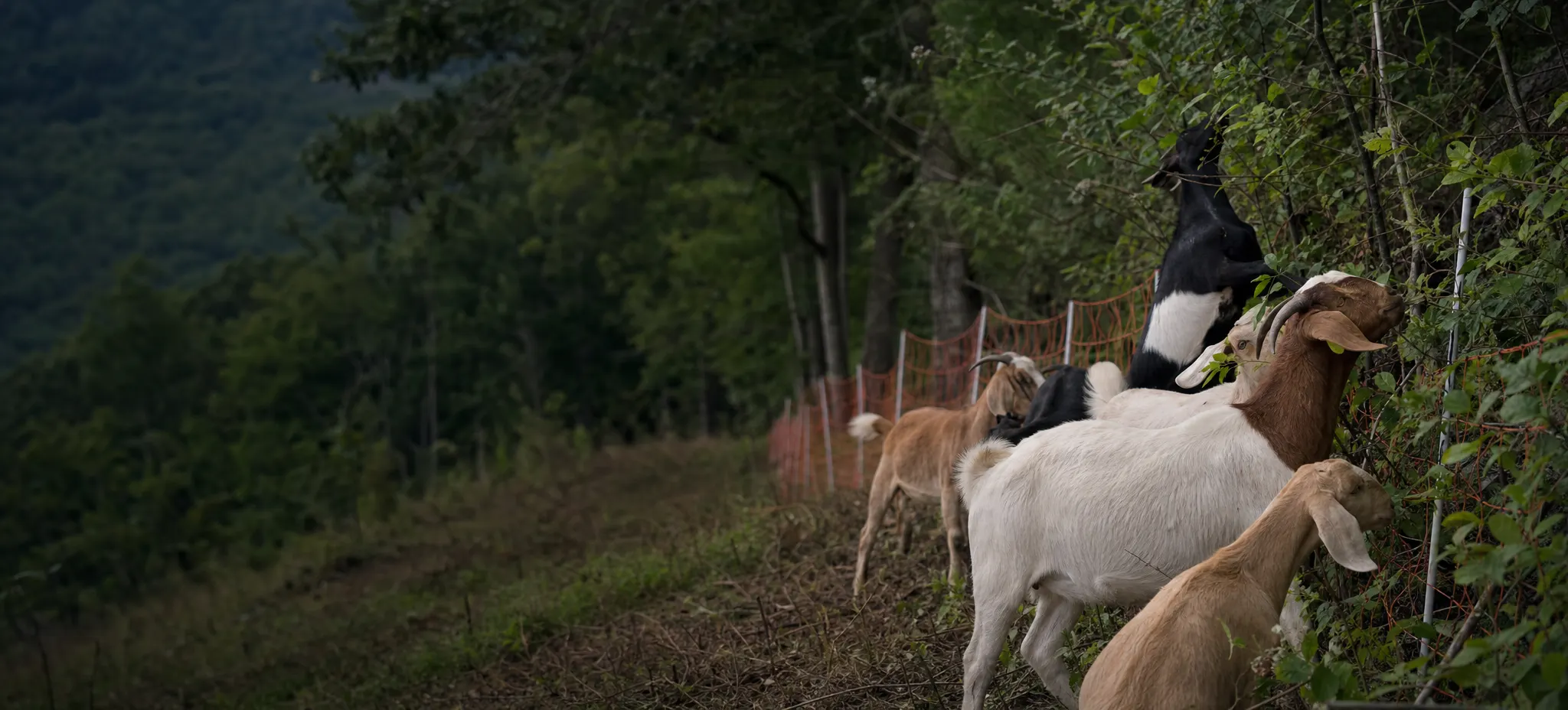
We send staff who treat fuel load as a buffet.
Meet your fire break specialist


Moose
Fire Break Foreman
“Moose is new, large and very serious about understory. He has not been told the job has an end.”

20 to 40goats per job
About 1/4acre per day

0 gallonsof herbicide
The Goat Squad Method
- 1
 Free
Free
walk-throughWe walk the land with you - 2Flat
per-acre quoteIn writing, before the gate opens - 3
 Fence up,
goats inShepherd on site every day - 4Daily
goat-cam textsWatch the fuel load shrink
What fire break clearing includes
- Walk-through and flat per-acre quote
- Solar electric fence along the break line
- Shepherd on site every day
- Daily goat-cam photos by text
- Fence-out of trees, gardens and plants you want kept
- Optional seasonal regraze to keep the break open
Day 1 vs Day 5
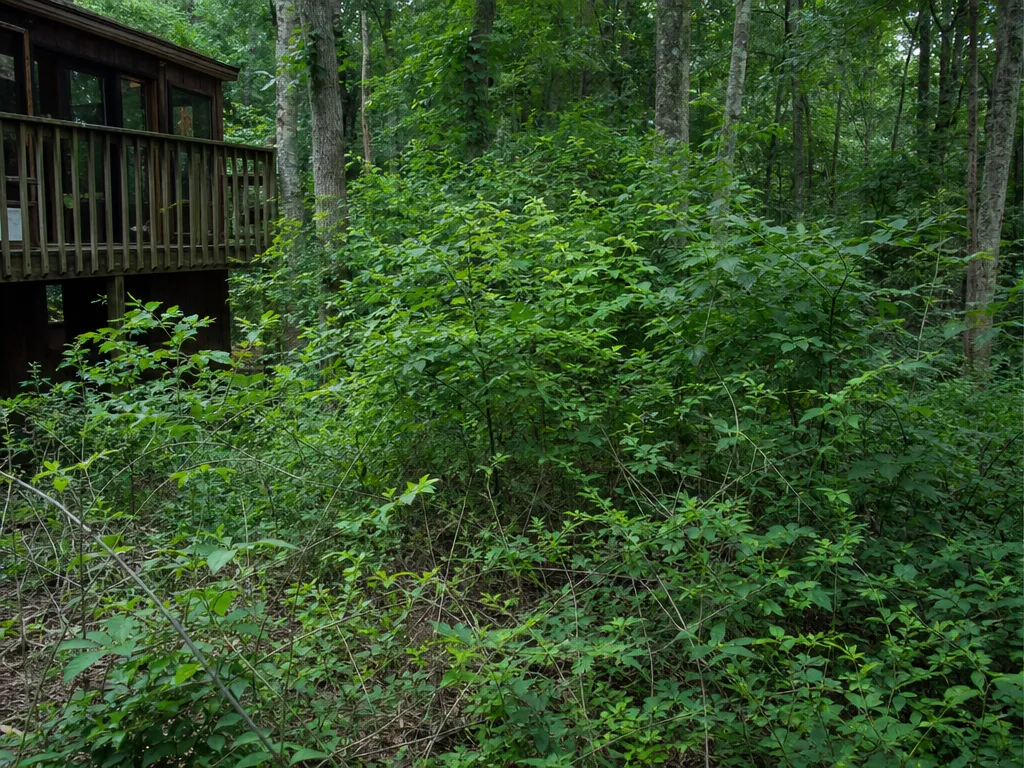 Day 1
Day 1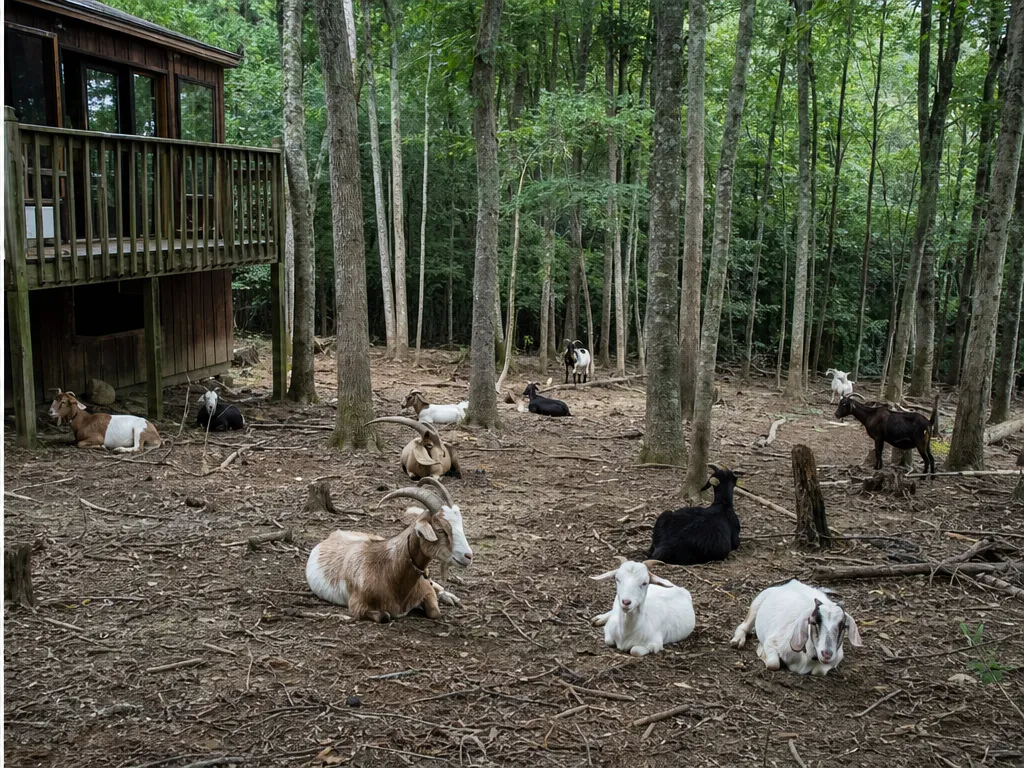 Day 5
Day 5What goats actually do for a fire break
Fire in the woods climbs. It starts in fine fuels like dry grass, leaves, brush and vines, then uses shrubs, saplings and low branches as a ladder into the tree canopy. Those middle layers are called ladder fuels, and they are exactly the layer goats like to eat.
Inside a portable solar electric fence, the herd strips leaves, vines, brambles and tender brush, and stands on its hind legs to browse low branches up to about six feet. The result is an open understory: a gap between the ground and the canopy, and a lot less green fuel near your house or along your line. A herd of about 30 goats typically clears around a quarter acre a day, depending on how thick the growth is.
What goats don't do: cut down trees, haul out logs, clean gutters, or eat dry leaf litter and dead wood. They reduce fuel. They don't make a property fire-safe, and nobody honest should promise that.
What a fire break job looks like
We walk the line with you first and mark the band you want thinned: behind the house, along the property line, or down the slope below the deck. The fence goes up around that band, with young trees, ornamentals and the vegetable garden fenced out. The herd moves in, the shepherd stays with them every day, and you get goat-cam photos by text so you can watch the understory open up from the kitchen window. When one section is done, the fence moves to the next.
After the herd leaves, you'll be able to see the ground under the trees again, along with any dead limbs, brush piles or old fencing that were hiding in there. That's useful information for your next step, whether it's a weekend with a rake or a call to an arborist.
Goats vs. a brush crew vs. a forestry mulcher
| Compared on | Goats | Brush crew with saws | Forestry mulcher |
|---|---|---|---|
| Steep, rocky slopes | Built for it | Slow and risky | Often can't get there |
| Soil and roots | Left in place, slope stays put | Mostly left in place | Ground torn up, erosion risk |
| Vines and brambles | Eaten, leaves and stems | Cut, piled, hauled or burned | Shredded into mulch |
| Trees and dead wood | Not their department | Yes, this is where crews shine | Yes, including small trees |
| What's left behind | Open understory and fertilizer | Brush piles unless hauled | A thick mulch layer, which is also fuel |
The honest summary: goats are the best tool for the brush, vines and low green growth, especially on slopes. If you have dead trees or big limbs over the roof, you need an arborist too. We're happy to go first and make their job easier.
Defensible space, in plain terms
Programs like Firewise USA talk about defensible space: keeping the area right around a home lean, clean and green, and thinning fuels farther out so a fire has less to work with on the way in. The idea is to reduce what can burn close to the house and break up the ladder from ground to canopy.
Goats fit the thinning part of that picture. They can work the brushy band between your yard and the woods, the strip along a property line, or the slope below a deck. The details of how far out and how much to clear depend on your lot, your slope and your neighbors.
Check with your local fire department for guidance specific to your property. We're a grazing crew, not a fire authority, and we don't certify anything. Tell us what they recommend and we'll quote the goats against it at the free walk-through.
Keeping the break open
Brush in the Blue Ridge grows back, and that's the point to plan around. After the first graze, the roots are still alive and will push out new leaves. The good news: regrowth is lower, softer and easier to keep down than the original tangle.
- First graze: knocks back years of accumulated brush and vines.
- Seasonal regraze: a shorter visit to keep the understory open, often timed ahead of the drier parts of the year.
- Your part: rake leaves off the deck, clear gutters and keep firewood away from the house. The staff has declined to help with any of this.
Follow-up grazes are quoted separately, and the full breakdown lives on our cost of goat grazing page.
Fire breaks around Asheville
Western North Carolina has wildfire seasons, usually in the drier stretches of spring and fall when leaves are down and humidity drops. Many homes in Buncombe County sit right where the yard meets the woods, and that edge is where brush piles up.
We see it on wooded ridge lots in Fairview and Black Mountain, on steep properties in Candler and Leicester, on long property lines in Weaverville and Arden, and on homes tucked into the woods near the Blue Ridge Parkway corridor. Creek banks along the French Broad and Swannanoa rivers are a good place to skip the herbicide entirely.
One plant note
Mountain laurel and rhododendron are common ladder fuels here, and they're toxic to goats. The shepherd identifies them at the walk-through and we fence the herd away from them, so those shrubs need a person with loppers. Moose has been told. Moose was disappointed.
Fire break questions
Will goats make my property fire-safe?
No one can promise that, and we won't. Goats reduce brush, vines and low ladder fuels, which is one useful part of defensible space. Talk to your local fire department about the full picture for your home.
Do the goats cut down trees?
No. They browse leaves, vines, brush and low branches up to about six feet. Dead trees, big limbs and anything over the roof are a job for an arborist.
How often should a fire break be grazed?
Most brushy lots need a first graze and then a seasonal regraze to keep regrowth down. We'll suggest a schedule at the walk-through and quote follow-ups separately.
How long does it take to clear a property line?
A herd of about 30 goats clears roughly a quarter acre a day, depending on how dense the growth is. You'll get the timeline with your flat per-acre quote.