 Shepherd
On Site Daily Flat
Flat
Per-Acre Quote Zero
Zero
Herbicide Solar
Solar
Electric Fence Daily Goat-Cam
Texts
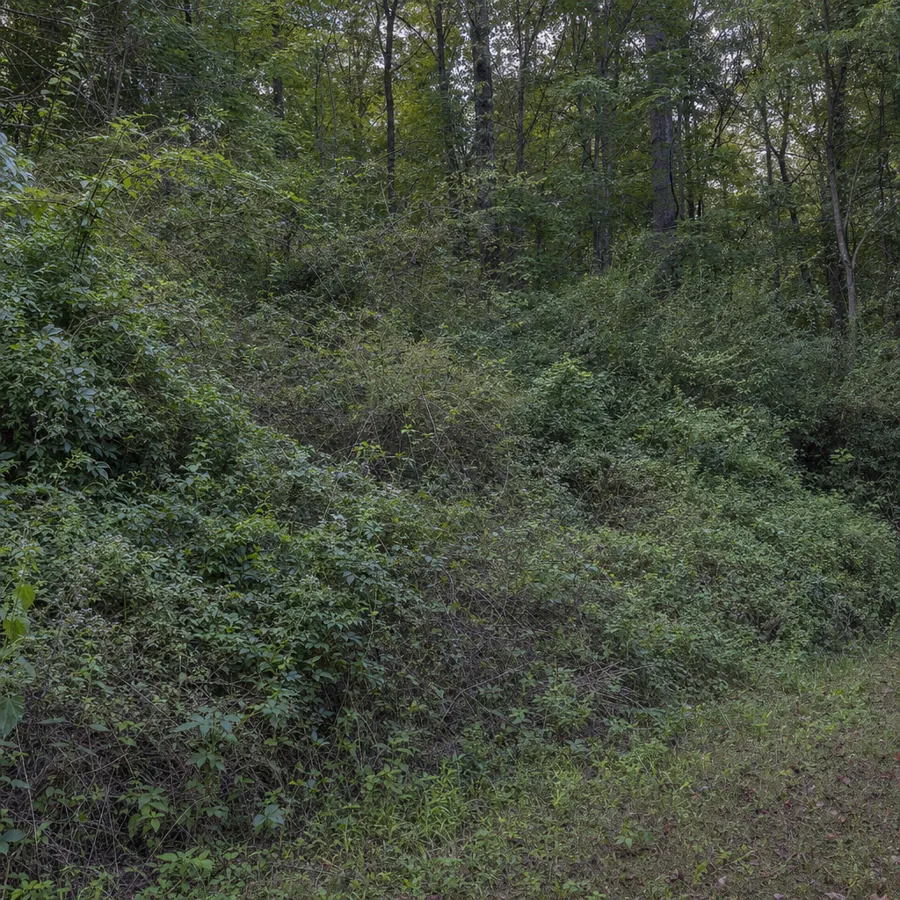
Invasives got here first. They don't share.
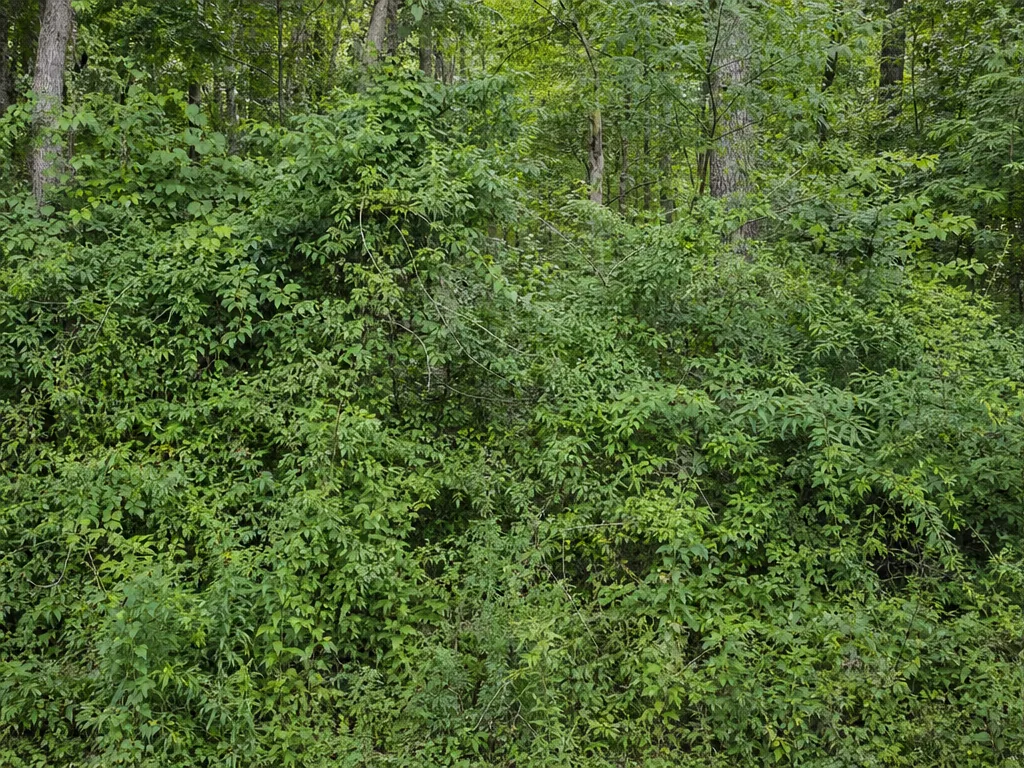
 Privet and autumn olive crowd out natives
 Bittersweet and ivy strangle trees
 Multiflora rose shreds anyone who goes in
Our staff eats thorns and doesn't mention it.
Meet your invasive species specialist

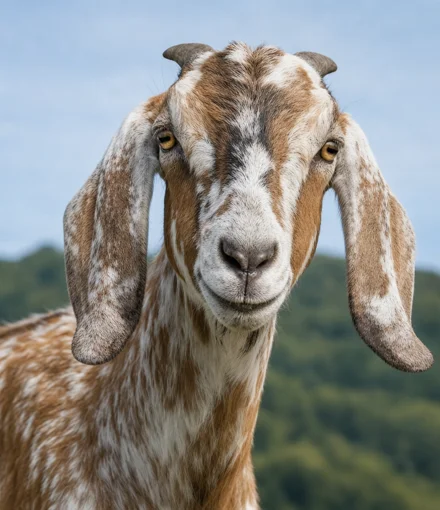
Juniper
Invasive Species Inspector
“Juniper is new, spotted and extremely thorough. She inspects every plant on the list personally, by eating it.”

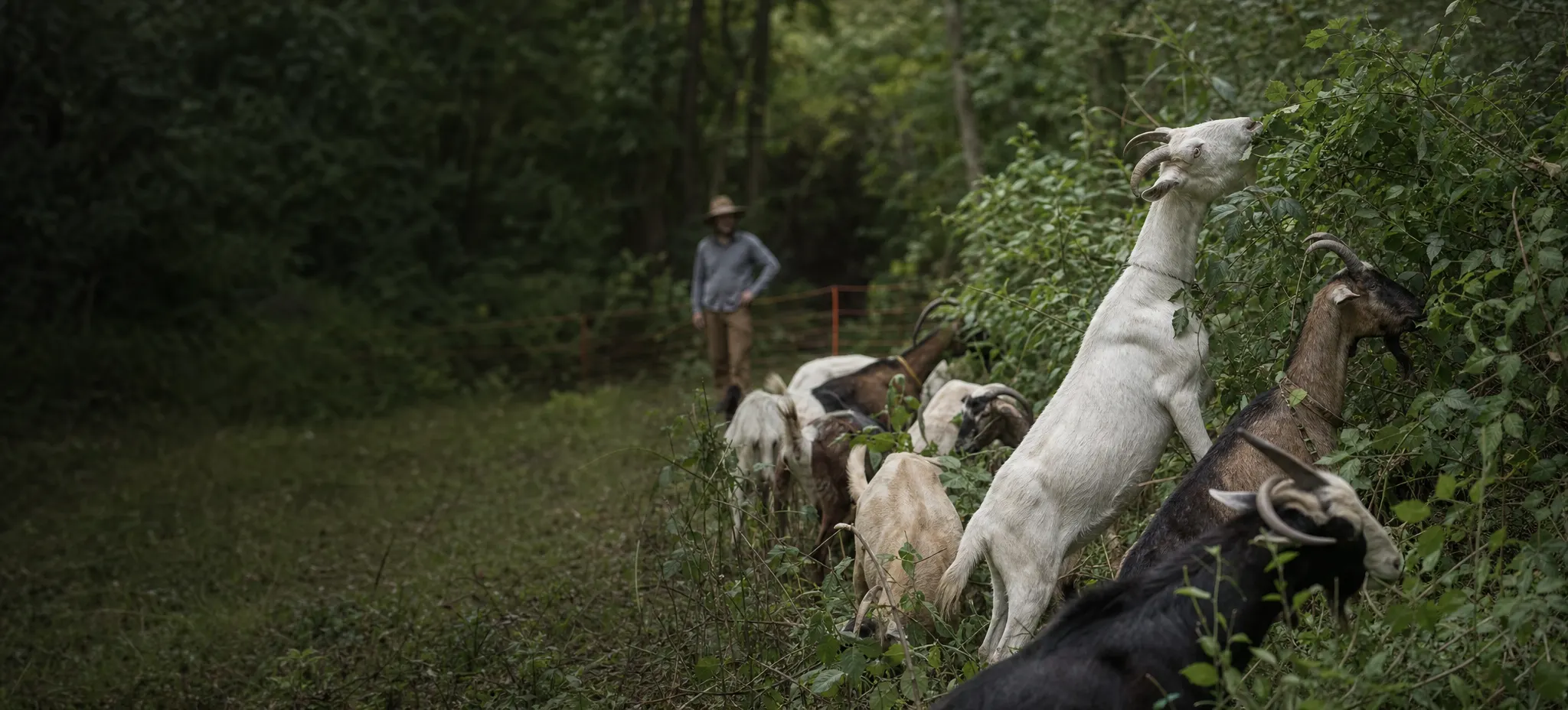
20 to 40goats per job
About 1/4acre per day
0 gallonsof herbicide
The Goat Squad Method
- 1
 Free
Free
walk-throughWe walk the land with you - 2Flat
per-acre quoteIn writing, before the gate opens - 3
 Fence up,
goats inShepherd on site every day - 4Daily
goat-cam textsWatch the understory open up
What invasive species grazing includes
- Walk-through, plant ID and flat per-acre quote
- Solar electric fence around the work area
- Shepherd on site every day
- Daily goat-cam photos by text
- Fence-out of natives and toxic plants
- Follow-up graze schedule for regrowth
Day 1 vs Day 5
 Day 1
Day 1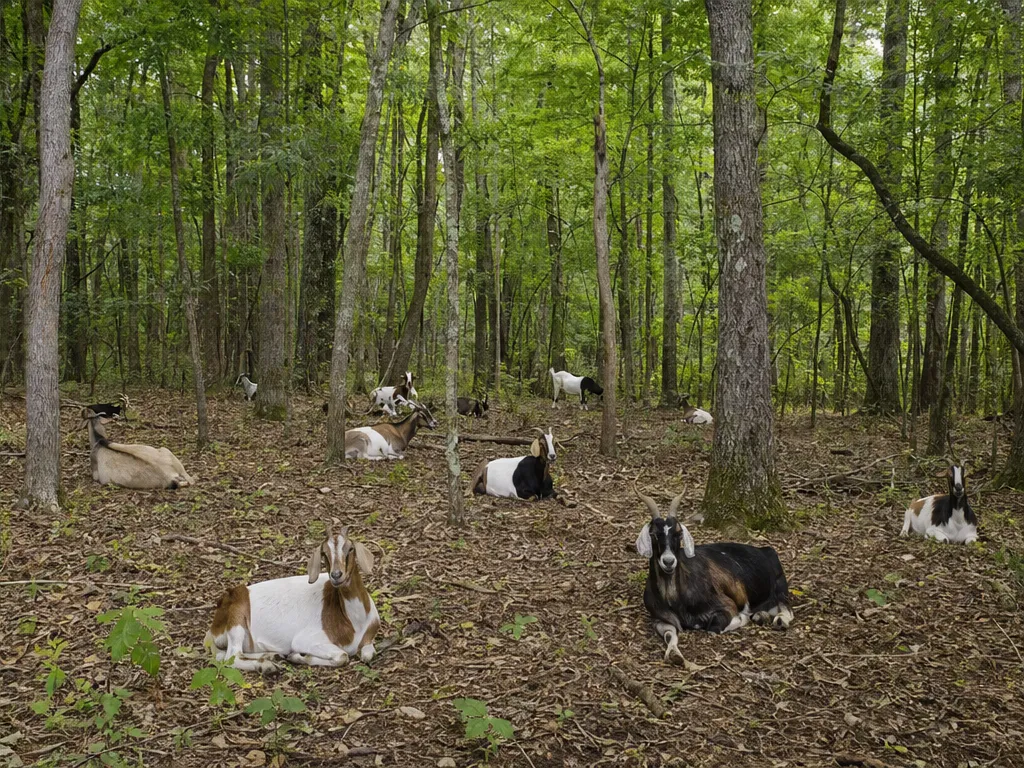 Day 5
Day 5Which Blue Ridge invasives goats will eat
Goats are browsers, not grazers. Given a choice, they'd rather eat leaves, vines and shrubs than grass, which makes them a good match for the woody invasives that take over forest edges in the mountains. These are the ones we see most around Asheville:
- Multiflora rose. Thorny arching canes that turn a field edge into a wall. Goats eat the leaves and tender canes, thorns and all.
- Chinese privet. An evergreen shrub that forms dense thickets along creeks. Goats strip the leaves and bark on the lower stems.
- Japanese honeysuckle. A semi-evergreen vine that blankets the ground and climbs small trees. A favorite snack.
- Oriental bittersweet. A twining vine that wraps and girdles trees. Goats eat the leaves and young vines.
- English ivy. Evergreen, climbing and hard to get rid of. Goats will eat it, and the shepherd keeps hay on site so it's never the only thing on the menu.
- Autumn olive. A fast-growing shrub with silvery undersides on its leaves. Goats browse it readily.
- Blackberry bramble. Technically native, but it takes over any open ground it can find. Goats go through it happily.
A herd of about 30 goats typically clears around a quarter acre a day, depending on how dense and woody the growth is. Thorny, head-high multiflora rose goes slower than a ground layer of honeysuckle.
Goats vs. herbicide vs. forestry mulching
| Compared on | Goats | Herbicide | Forestry mulching |
|---|---|---|---|
| Near creeks, gardens, pets | No chemicals at all | Drift and runoff concerns | No chemicals |
| Steep or rocky ground | Built for it | Hard to apply evenly | Limited by slope and access |
| Native plants nearby | Fenced out ahead of time | Risk of overspray | Ground up along with everything else |
| Soil and roots | Left in place | Left in place | Surface churned by heavy equipment |
| Long-term control | Suppresses with repeat grazes | Can kill roots, often needs reapplication | Resprouting common without follow-up |
The honest summary: none of these is a one-and-done fix. Land managers often combine methods, and goats are a strong first step on large, steep or sensitive sites where spraying or machines are hard to justify.
Suppression, not eradication
We want to be clear about what goats do. They suppress invasive plants. They don't eradicate them. Most of the species on this list resprout from roots or stumps, and the soil around them holds a bank of seeds that can keep germinating for years.
What grazing does well is take away the leaves over and over, so the plants spend their stored energy regrowing instead of spreading. Each round of regrowth comes back weaker. A typical plan looks like this:
- First graze to open the thicket and knock the growth back.
- One or two follow-up grazes the same season as shoots return.
- Repeat in later seasons until regrowth is light enough to manage by hand.
For big woody shrubs like privet and autumn olive, the goats will strip everything they can reach, about six feet up. Thick trunks above that are still standing when we leave. Many owners have those stems cut afterward and keep the resprouts in check with follow-up grazes. We don't do tree or stump removal, but we'll tell you honestly what's left for someone with a saw. You can see how our quotes work in the goat grazing cost guide.
Protecting the plants you want to keep
Goats don't read field guides. They'll eat a native spicebush just as happily as a privet, so the walk-through is where we sort out the keepers.
- Fence-outs. Young natives, specimen trees, gardens and restoration plantings get their own fence so the herd works around them.
- Toxic plants. Rhododendron and mountain laurel are common in these woods and are toxic to goats. The shepherd checks for them and fences them out or skips that section.
- Timing. Where we can, we graze before invasive shrubs set fruit, so fewer seeds end up spread around the site.
- Replanting. Once the thicket is open, planting natives helps them claim the space before the invasives come back. The fertilizer is included.
Where invasives take over around Asheville
In the mountains, invasives follow disturbance and water. Chinese privet lines the creeks that feed the French Broad and Swannanoa rivers. Multiflora rose and autumn olive fill old pastures and field edges in Leicester, Candler and Weaverville. Honeysuckle, English ivy and bittersweet climb the wooded lots of West Asheville, Fairview and Arden, especially where a yard meets the woods.
We also see them on HOA common areas, church properties and conservation land near Black Mountain and along the Blue Ridge Parkway corridor, where the goal is to open the understory without spraying next to trails or streams.
Not sure what's growing on your land? Book a free walk-through. The shepherd will identify the invasives, flag the toxic plants and give you a flat per-acre quote.
Invasive plant questions
Will goats get rid of invasive plants for good?
No, and we won't pretend otherwise. Goats suppress invasives by repeatedly stripping their leaves, which weakens the roots over time. Lasting control usually takes follow-up grazes over more than one season, sometimes combined with cutting or replanting.
Do goats spread invasive seeds?
Some seeds can pass through a goat and still sprout. We reduce that by grazing before fruit sets where we can, and the follow-up grazes catch seedlings while they're small.
Can the goats remove privet or autumn olive trees?
They strip leaves and bark up to about six feet, which weakens the shrub, but they don't fell trees or pull stumps. Larger trunks usually need to be cut by a person afterward, and follow-up grazes keep the resprouts down.
Will the goats eat my native plants too?
They will if they can reach them. That's why the walk-through includes plant ID, and anything you want kept gets fenced out before the herd arrives.