
 Shepherd
On Site Daily Flat
Flat
Per-Acre Quote Zero
Zero
Herbicide Solar
Solar
Electric Fence Daily Goat-Cam
Texts
Common areas are nobody's yard.
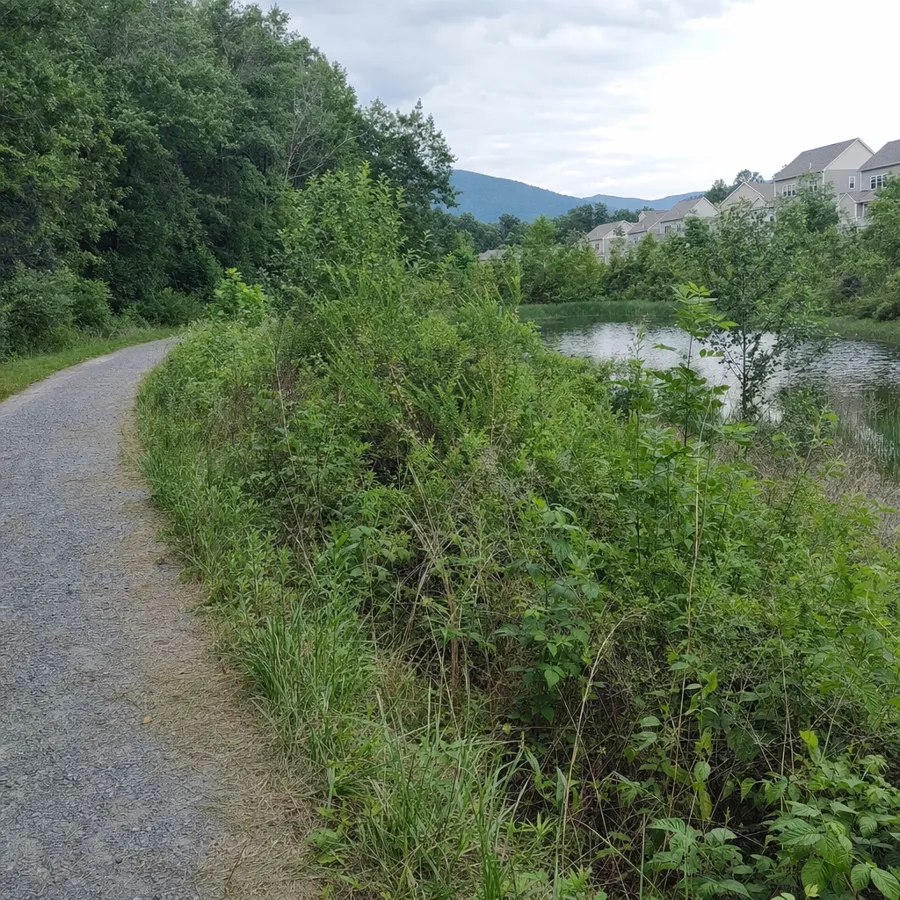
 Brush crowding pond banks and creeks
- Residents don't want spray near water
- Boards need a clear written quote
We send staff who don't need a committee to start eating.
Meet your HOA and land trust specialist


Pam
Chief Snacking Officer
“Pam has attended every board meeting she was invited to. She has not been invited to one.”

20 to 40goats per job

About 1/4acre per day

0 gallonsof herbicide
The Goat Squad Method
- 1
 Free
Free
walk-throughWe walk the land with you - 2Flat
per-acre quoteIn writing, before the gate opens - 3
 Fence up,
goats inShepherd on site every day - 4Daily
goat-cam textsWatch the common area reappear
What HOA and land trust grazing includes
- Walk-through and written flat per-acre quote
- Solar electric fence around each grazing area
- Shepherd on site every day
- Daily goat-cam photos by text
- Fence-out of plantings, trails and areas to keep
- Scheduled seasonal grazes on a set calendar
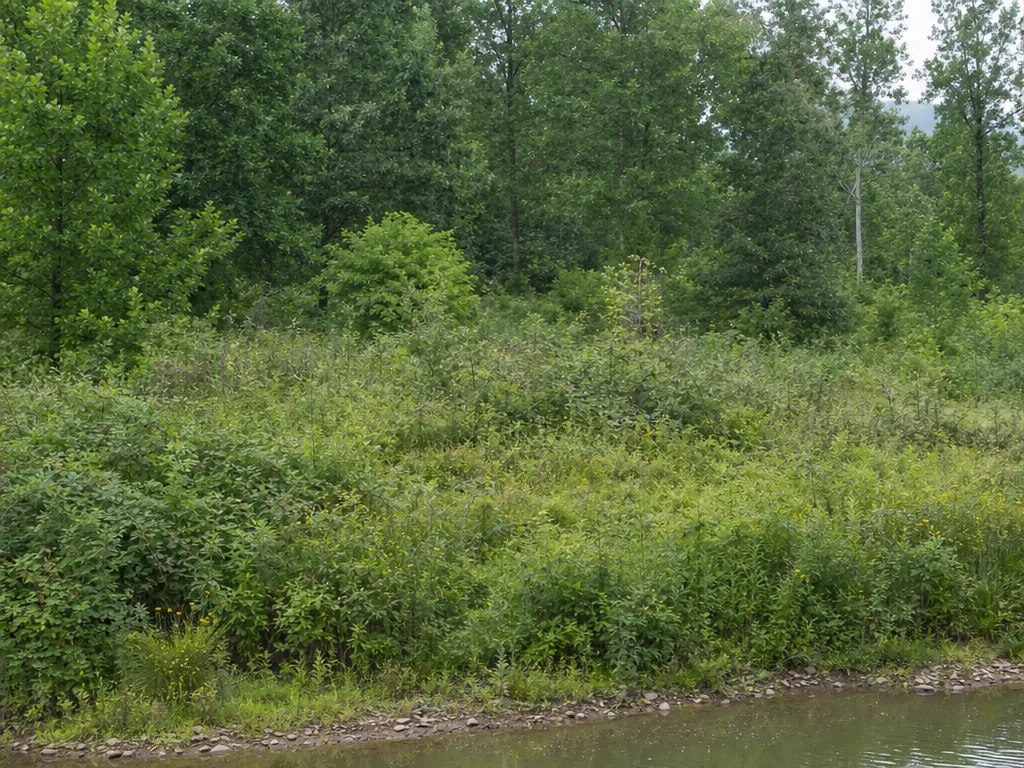
Day 1 vs Day 5
 Day 1
Day 1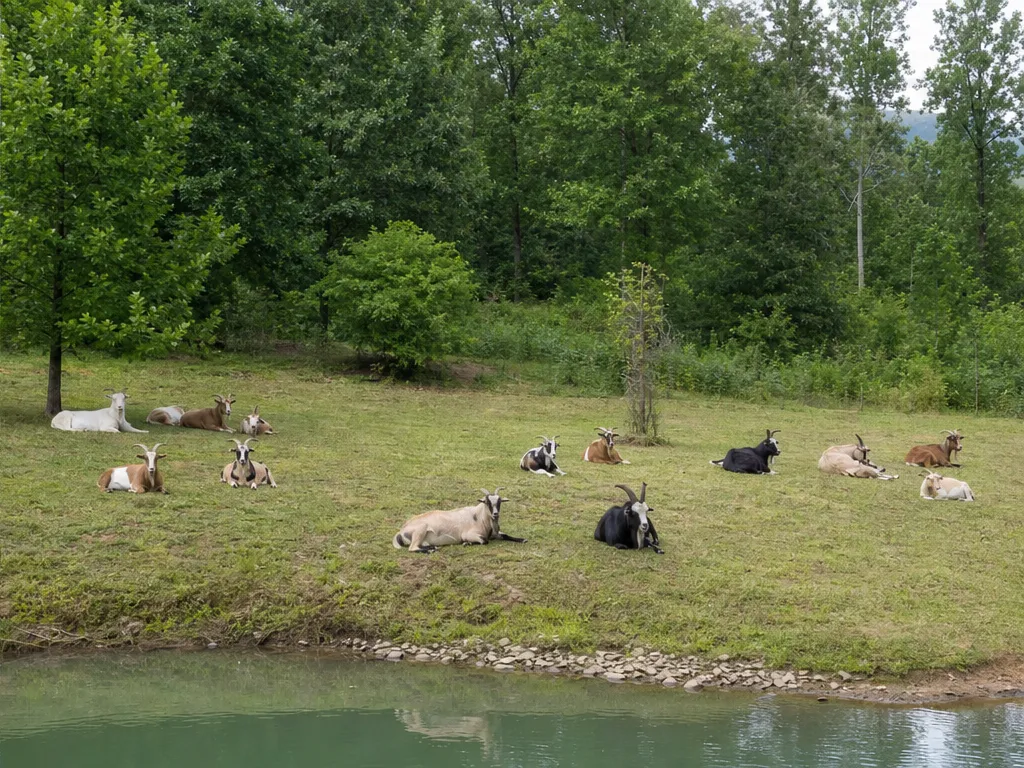 Day 5
Day 5How grazing works for shared land
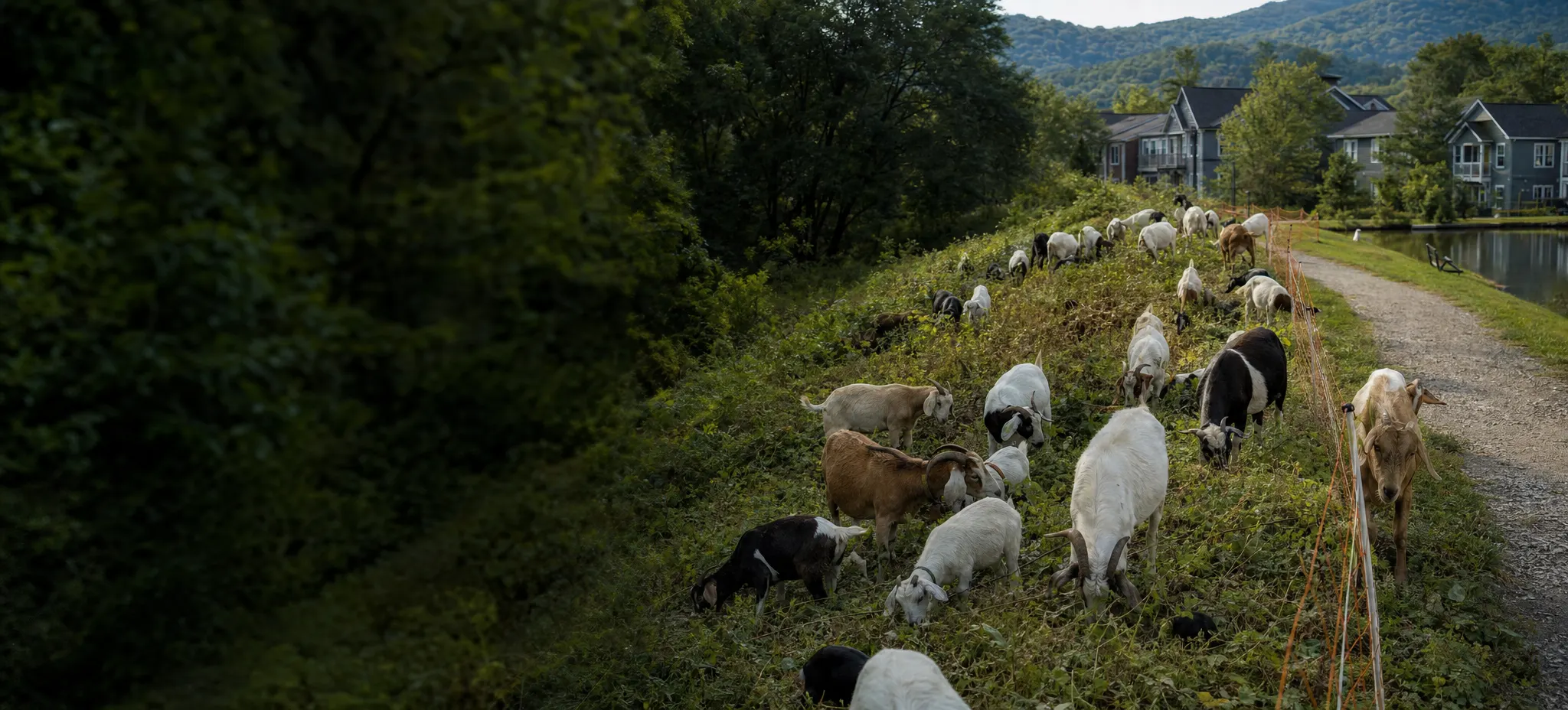
HOAs, land trusts, churches, schools and greenway groups tend to own the hardest land in town: the steep bank behind the clubhouse, the brushy edge of a retention pond, the conservation strip nobody can mow. Goats are good at exactly that kind of ground.
A herd of 20 to 40 goats works inside a portable solar electric fence, one section at a time. They eat brush, brambles, vines and many invasive plants, and leave the roots holding the soil in place. A herd of about 30 goats typically clears around a quarter acre a day, depending on how thick the growth is. A shepherd stays with the herd every day, checks the fence, keeps water full and handles questions from the neighbors.
For larger properties, we plan the work as a rotation: graze one area, move the fence, graze the next, and come back on a set schedule.
Why a seasonal schedule works better than one big clear
Brush on shared land usually got that way over years, and it won't give up after one visit. The roots are still alive after the first graze and will push out new growth. Each time the plants have to regrow from stored energy, they come back weaker. A first graze followed by scheduled return visits, often in late spring and again later in the growing season, keeps the regrowth low and the budget predictable.
It also makes life easier for whoever manages the property. Instead of a surprise cleanup every few years, the grazes land on the calendar like any other maintenance item. Residents learn when to expect the herd, and the board knows what the line item will be before the fiscal year starts. Pam also prefers a routine.
Goats vs. a mowing contractor vs. a spray crew
| Compared on | Goats | Mowing contractor | Herbicide crew |
|---|---|---|---|
| Steep banks and slopes | Built for it | Often skipped or unsafe | Hard to apply evenly |
| Near ponds and creeks | No chemicals at all | No chemicals, but ruts on soft ground | Runoff concerns, often restricted near water |
| Woody brush and vines | Eaten down | Mostly too thick to mow | Dies in place, left standing |
| Resident reaction | People bring lawn chairs | Noise complaints | Worried emails |
| Roots and soil | Left in place, banks stay put | Left in place | Roots can die, soil can loosen |
The honest summary: for flat, open turf, a mower is the right tool. For banks, brush, edges and anything near water, goats usually are.
What your board gets on paper
Shared land means shared decisions, so we make the paperwork easy to pass around the table.
- A written flat per-acre quote after a free walk-through, broken out by area if you have more than one.
- A proposed schedule for seasonal grazes, so the line item is predictable year to year.
- A site map showing where the fence goes and what gets fenced out, like plantings, playgrounds and trails.
- Resident notice language you can send out before the herd arrives.
No hourly billing and no "we found more brush" upcharges. The full breakdown is on our cost of goat grazing page, and the first step is a free walk-through with whoever holds the keys.
Goats, residents and the fence
People love watching goats work. Expect an audience, especially kids and dog walkers. We post signage at the fence explaining who the herd is, what they're eating and who to call.
- Residents stay outside the fence. It's electric. The pulse is mild and safe, but it's not friendly, and it keeps both people and goats where they belong.
- Please don't feed the staff. Bread, chips and lawn clippings can make goats sick. They are on a strict brush diet.
- Dogs on leash near the fence. The goats find dogs very interesting. The feeling is usually mutual.
- Questions go to the shepherd, who is on site every day and happy to talk goats.
Shared land around Asheville
Buncombe County has a lot of land held in common: neighborhood open space in Arden and Weaverville, pond banks in newer subdivisions around Candler and Fairview, church grounds with a wooded back acre, and conservation easements tucked along the ridges near the Blue Ridge Parkway corridor.
Much of it drains toward the French Broad and Swannanoa rivers, which is why so many groups want to keep herbicide away from the water. Greenway edges, creek buffers and retention pond banks are some of our most common jobs, because they're too wet or steep to mow and too close to water to spray. On a pond bank, we plan the fence line around the water at the walk-through and keep the herd on the slope, where the brush is. Goats have strong opinions about getting their feet wet, which helps.
Conservation land
For land trusts managing invasive plants, goats are one tool in a longer plan. They knock back the growth and weaken it with repeat grazes. They don't eradicate anything in one visit, and we'll say so in writing. Pam would like it noted that she tried.
HOA and land trust questions
Can residents pet the goats?
Residents need to stay outside the electric fence for their safety and the herd's. Watching is encouraged, and the shepherd on site is happy to answer questions. We post signage at the fence so nobody has to guess.
Is grazing safe near a retention pond?
Yes, and it's one of the main reasons boards call us. Goats use no herbicide and leave the roots holding the bank. We'll plan the fence line around the water at the walk-through.
Can we get a quote our board can vote on?
Yes. After a free walk-through, you get a written flat per-acre quote, broken out by area, with a proposed seasonal schedule. There's no hourly billing to explain at the next meeting.
Will one graze get rid of our invasive plants?
No. A first graze knocks the growth back, and repeat grazes over a season or two weaken the roots. That's why most shared properties book scheduled seasonal grazes.